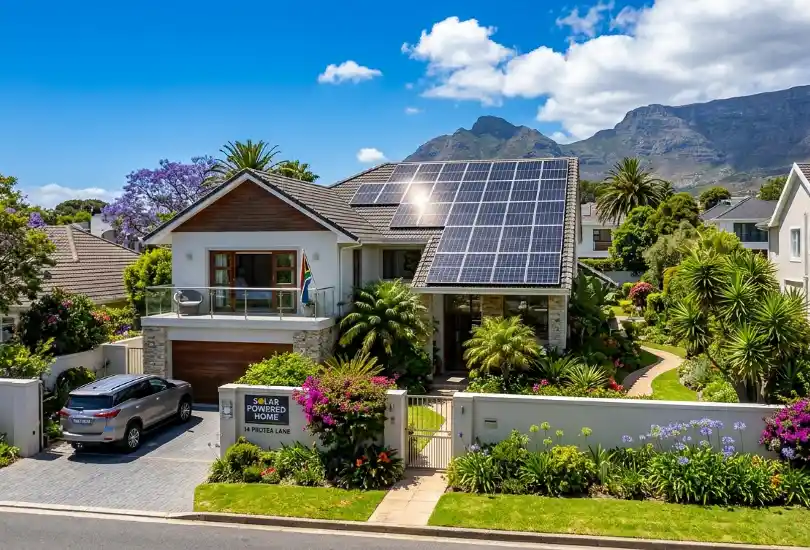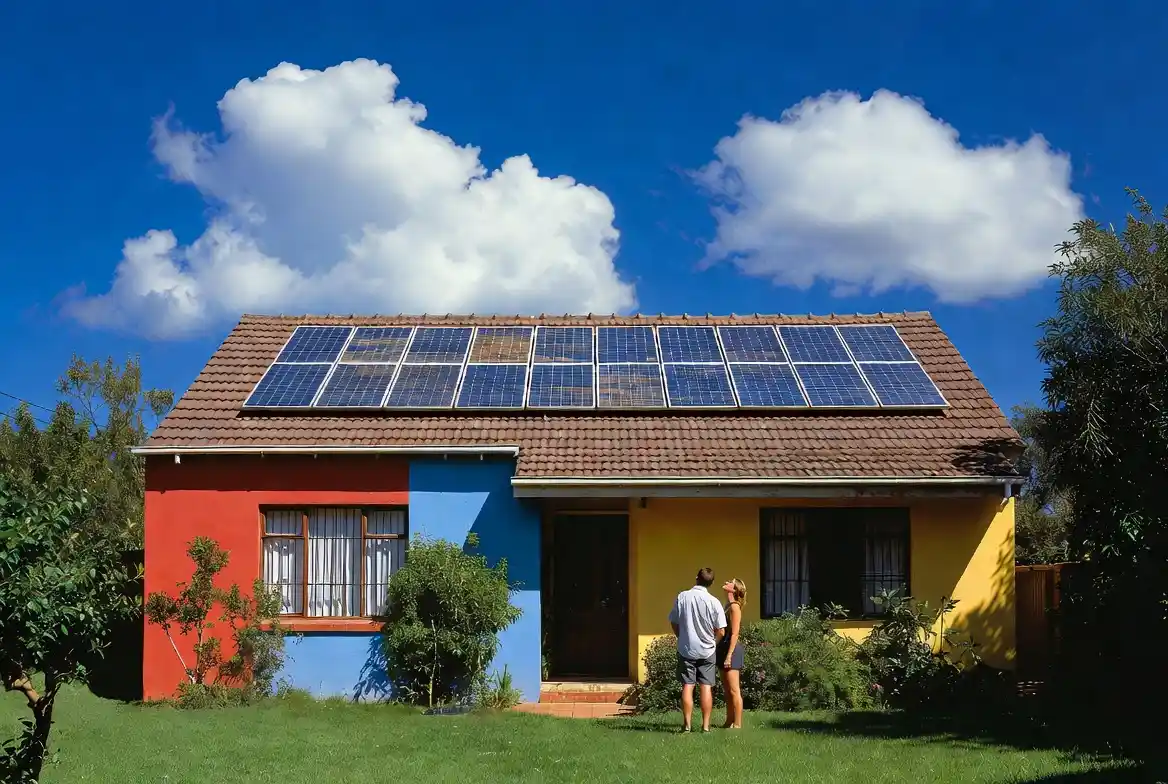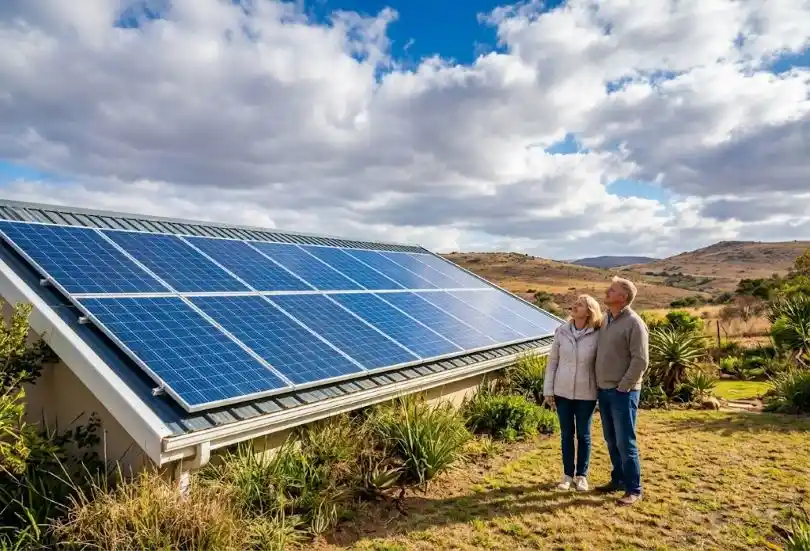

"You need a north-facing roof for solar" is repeated so often in South Africa that many homeowners without one assume solar simply isn't worth pursuing. North-facing is genuinely the ideal orientation in the Southern Hemisphere — but ideal isn't the same as required, and plenty of east-west, and even split-orientation roofs make solar worthwhile.
Why North Is Considered Ideal
In the Southern Hemisphere, the sun tracks through the northern part of the sky across the day, meaning a north-facing panel array captures the most consistent, highest-intensity sunlight across the most hours. This translates into the highest generation per panel for a given roof area — which is exactly why it's the default recommendation and the benchmark other orientations get compared against.
What East and West Actually Cost You
An east-facing array captures strong morning sun and tapers off through the afternoon; west-facing does the reverse. Compared to an equivalent north-facing array, both typically generate somewhat less total daily output — but "somewhat less" is often a manageable reduction, not a dealbreaker, particularly if it's offset by simply adding a few more panels to compensate, where roof space allows.
There's also a genuine upside worth knowing: an east-facing array's morning-heavy generation can suit households with high morning usage (getting ready for work, breakfast routines), while west-facing's afternoon/evening-heavy generation can suit households whose usage peaks later in the day — meaning orientation isn't purely a penalty, it can actually be a better match for some usage patterns than north-facing would be.
Split Roofs: Often Better Than Assumed
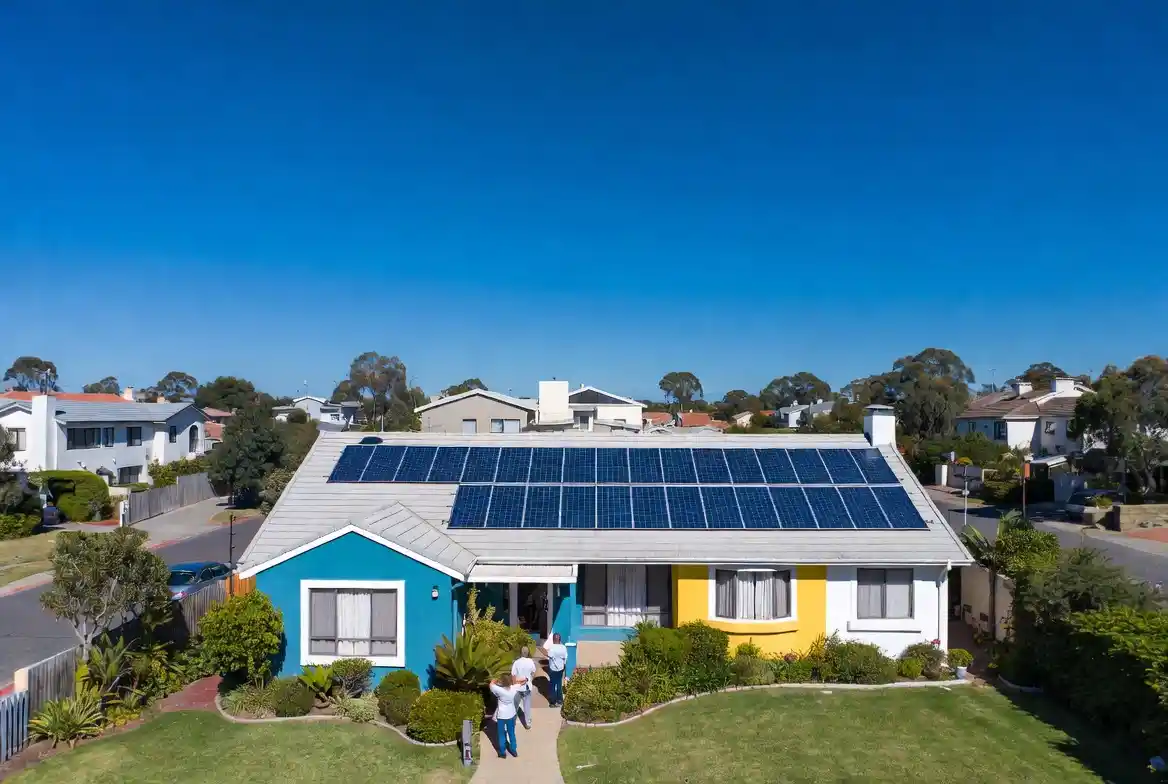
Many South African homes have roof sections facing multiple directions. Rather than treating this as a problem, a well-designed system can split the panel array across orientations — for instance, some panels north-facing and some east- or west-facing — smoothing generation across more hours of the day rather than concentrating it all in a shorter north-facing peak window. This can sometimes deliver a more usage-matched generation curve than an all-north array would, particularly for self-consumption-focused households.
South-Facing: The Genuine Exception
South-facing roof sections are the one orientation that meaningfully underperforms in the Southern Hemisphere, receiving the least direct sun of any direction. It's not necessarily a dealbreaker if it's the only option, but expect a more noticeable generation reduction than east/west, and it's worth specifically asking an installer whether panels on a south-facing section make sense at all versus concentrating the array elsewhere on the property.
The Real Question: Is It Worth It for Your Specific Roof?
Rather than treating "not north-facing" as disqualifying, the better question is whether your specific roof — whatever its orientation — can still deliver a system size and payback period that makes sense for your usage and budget. That's a calculation, not a rule of thumb, and it's one worth actually running rather than assuming the answer based on orientation alone.
Run Your Own Numbers
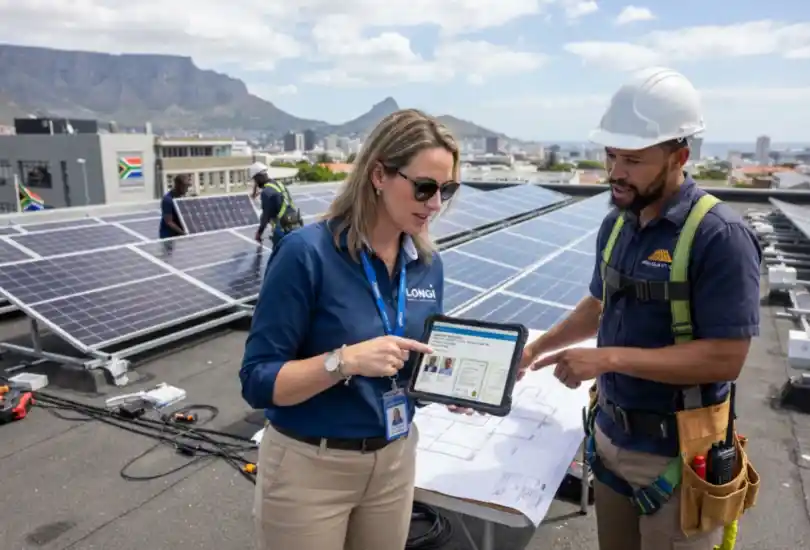
Our solar calculator gives a starting estimate based on your usage and location — a reasonable first check regardless of your roof's orientation. For an orientation-specific assessment of your actual roof, get a proper site survey from installers on ADEO, who can advise on splitting the array or compensating with additional panels if your roof isn't ideally oriented.
Frequently Asked Questions
How much less does an east- or west-facing system generate compared to north-facing? It varies by specific roof pitch and local conditions, but the reduction is generally moderate, not severe — often manageable by adding a small number of extra panels if roof space allows.
Is it worth avoiding solar entirely if I only have a south-facing roof section? Not necessarily — an installer can advise whether other sections of your roof (even smaller ones) offer better orientation, or whether a south-facing array still makes financial sense for your situation despite the reduced output.
Does roof pitch matter as much as orientation? Pitch affects output too, though generally less dramatically than orientation — a knowledgeable installer's site assessment should account for both together, not just direction alone.

Writes about solar and renewable energy for South African homes and businesses at SolarTally, and cross-checks every guide against current tariffs and installer standards.


Popular on SolarTally