

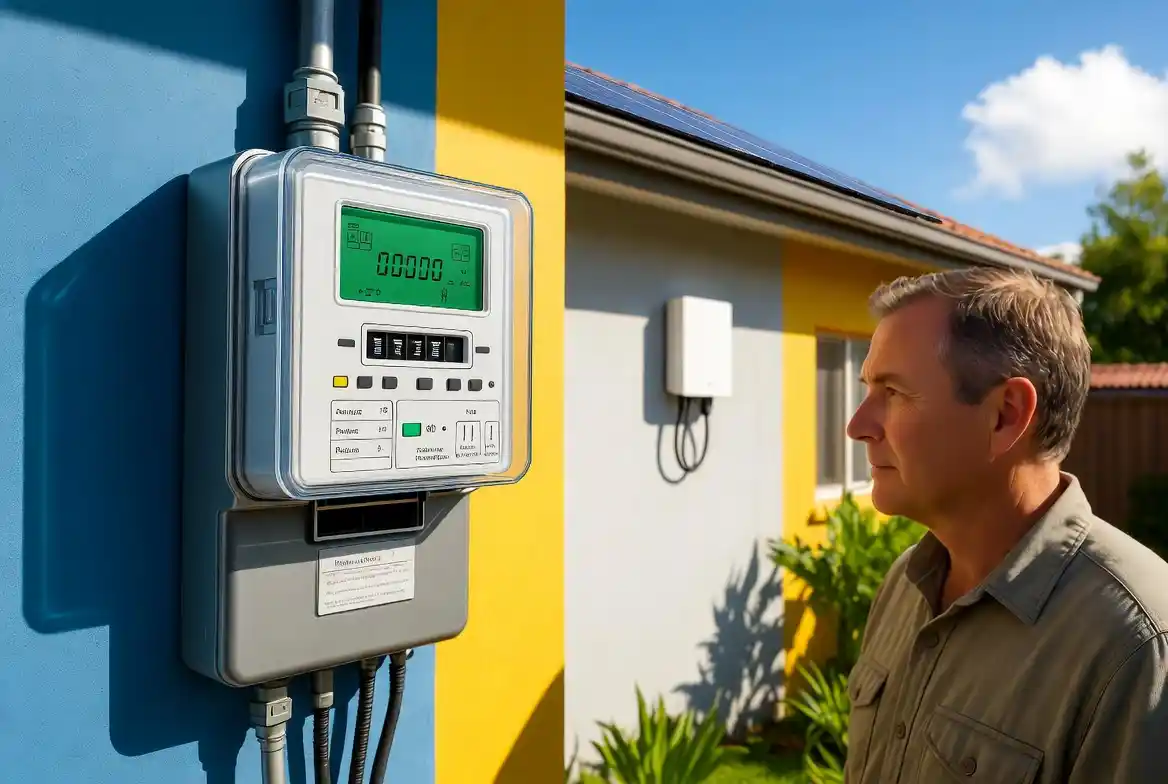
Most solar savings explanations assume a monthly account bill — a fixed amount that solar visibly reduces. Homeowners on prepaid electricity, buying credit in chunks as needed, experience the same underlying savings differently: not as a smaller invoice, but as prepaid credit lasting noticeably longer between top-ups. Understanding that difference matters both for setting realistic expectations and for getting a meaningful sizing estimate.
Why Prepaid Feels Different, Even When the Math Is the Same
Solar still offsets the same kWh of usage whether you're on prepaid or a monthly account — the underlying physics and tariff math don't change. What changes is how that saving is experienced: instead of watching a bill shrink, a prepaid household watches their existing credit stretch further, and buys top-ups less often. For some homeowners this is actually a clearer, more tangible signal of savings than an abstract bill reduction, since it's visible in day-to-day behaviour rather than once a month on paper.
Metering Considerations Specific to Prepaid
A standard prepaid meter is typically built for one-directional measurement — tracking what you draw from the grid, not what you might export back to it. This has a practical consequence: prepaid households considering solar should confirm with their municipality or installer whether their existing meter needs upgrading to a bidirectional or smart meter to correctly account for any exported solar power, particularly if a grid-tied (non-hybrid) system is being considered. For most prepaid homeowners going the hybrid battery route (self-consuming most solar power, exporting little to nothing), this matters less, but it's worth confirming rather than assuming.
Self-Consumption Matters Even More on Prepaid
Since prepaid accounts generally don't benefit from feed-in credit the way some monthly-billed net-metering arrangements might, maximising self-consumption — using your own generated solar power directly rather than exporting it — is usually the more financially sound design goal for a prepaid household. This often means sizing the system closer to your actual midday usage pattern rather than maximising total panel count, and can make a well-sized battery more valuable here specifically, since it lets you shift midday generation into your own evening usage instead of it going to the grid for little or no credit.
A Practical Way to Track Your Own Savings
Since prepaid savings don't show up as a single line-item reduction, it helps to track top-up frequency and amount before and after installation over a comparable period (same season, similar usage pattern) rather than expecting an obvious single number. Keeping a simple log of top-up dates and amounts for a few months before and after installation gives a genuinely useful before/after comparison specific to your own household.
Getting a Sizing Estimate as a Prepaid Household
Our solar calculator works the same way regardless of whether you're on prepaid or a monthly account — it estimates based on your usage and municipality, and the underlying system sizing logic doesn't change. When you're ready to install, ask any installer directly whether your existing meter needs upgrading, and compare installers who can answer that clearly on ADEO.
Frequently Asked Questions
Does my prepaid meter need to be replaced to add solar? Not always — for a hybrid system designed around self-consumption with minimal export, your existing meter is often sufficient. Confirm directly with your installer or municipality if you're considering a grid-tied system with meaningful export.
Will solar make my prepaid credit last exactly twice as long? Not necessarily precisely double — the actual multiplier depends on what share of your total usage solar offsets, which varies by system size, usage pattern, and season.
Is there any financial benefit to exporting excess solar power on a prepaid account? This varies significantly by municipality — some offer feed-in credit programmes (SSEG registration), others don't meaningfully credit prepaid accounts for export. Worth checking with your specific municipality rather than assuming either way.

Writes about solar and renewable energy for South African homes and businesses at SolarTally, and cross-checks every guide against current tariffs and installer standards.


Popular on SolarTally