

A solar installation that connects to the grid — either exporting power or simply running in parallel with it — generally needs to be registered with your municipality, a step that's easy to overlook amid the excitement of choosing panels and getting quotes. Understanding this process, and whose job it is, protects you from a compliance gap you might not discover until it matters.
Why Municipal Registration Exists
Municipalities need to know about grid-tied generation on their network for safety (so utility workers aren't at risk from unexpected power sources during maintenance) and for billing and grid management purposes, particularly where any export or feed-in credit is involved. This is commonly referred to as SSEG (Small-Scale Embedded Generation) registration, though exact terminology and requirements vary by municipality.
What the Process Generally Involves
While specifics differ between municipalities, the general shape usually includes: submitting an application with system specifications (inverter details, capacity, whether export is enabled), sometimes an inspection or compliance certificate submission, and approval before or shortly after the system goes live. Some municipalities have streamlined this considerably; others still have a slower, more paperwork-heavy process — worth asking your specific municipality or your installer directly what's currently required in your area, since this has genuinely varied and evolved over time.
Whose Job Is This — Yours or the Installer's?
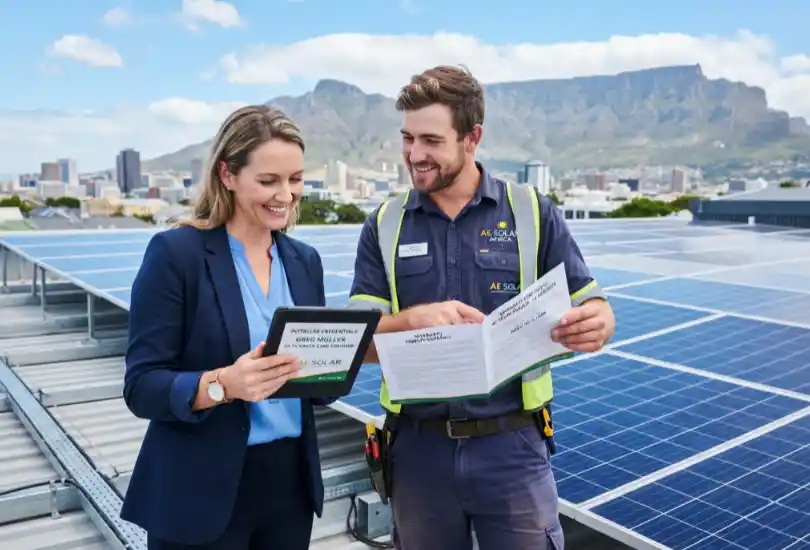
A reputable installer experienced in your specific municipality should handle this registration as part of the installation service, or at minimum guide you through exactly what's needed and when. This is worth confirming explicitly before installation begins: ask directly whether municipal registration is included in the quote, or whether it's something you're expected to handle separately. An installer unfamiliar with your municipality's specific process is a meaningful signal to ask more questions, not necessarily a dealbreaker.
What Happens If You Skip It
An unregistered grid-tied system running without municipal knowledge carries real risk — potential compliance issues if discovered later, complications with insurance claims if the electrical installation isn't properly documented, and in some cases, direct safety risk to utility workers if the municipality genuinely doesn't know a private generation source is on their network. It's not a step worth skipping to save time or paperwork hassle.
Grid-Tied vs Hybrid: Does This Apply to Both?
Registration requirements generally apply to any system connected to the grid, whether it's a pure grid-tied system or a hybrid system with battery storage that's still grid-connected. A genuinely off-grid system with no grid connection at all wouldn't need this registration, but as covered in our piece on grid-tied vs off-grid vs hybrid, true off-grid is rare for South African homes with an existing grid connection.
Questions to Ask Before Installation
- Is municipal registration included in this quote, or handled separately?
- What's the current process and expected timeline for our specific municipality?
- Does the system need to be registered before switch-on, or is it acceptable to register shortly after?
- What documentation will we receive confirming registration is complete?
Getting Started With the Right Installer
Our solar calculator gives a starting estimate for system size and cost — useful before the municipal-process conversation, which is genuinely installer- and location-specific. Compare installers experienced with your specific municipality's requirements on ADEO.
Frequently Asked Questions
Does every grid-tied solar installation need municipal approval? Requirements vary by municipality, but registering any grid-connected generation system is the safer, more compliant default assumption — confirm the specific requirement for your area directly rather than assuming it doesn't apply to you.
How long does municipal approval typically take? This varies significantly by municipality and current application volume — ask your installer for a realistic current estimate for your specific area rather than assuming a fixed timeframe.
Can I switch on my system before registration is complete? This depends on your municipality's specific process — some allow installation and initial use with registration following shortly after, others require approval first. Confirm directly rather than assuming either way.

Writes about solar and renewable energy for South African homes and businesses at SolarTally, and cross-checks every guide against current tariffs and installer standards.


Popular on SolarTally